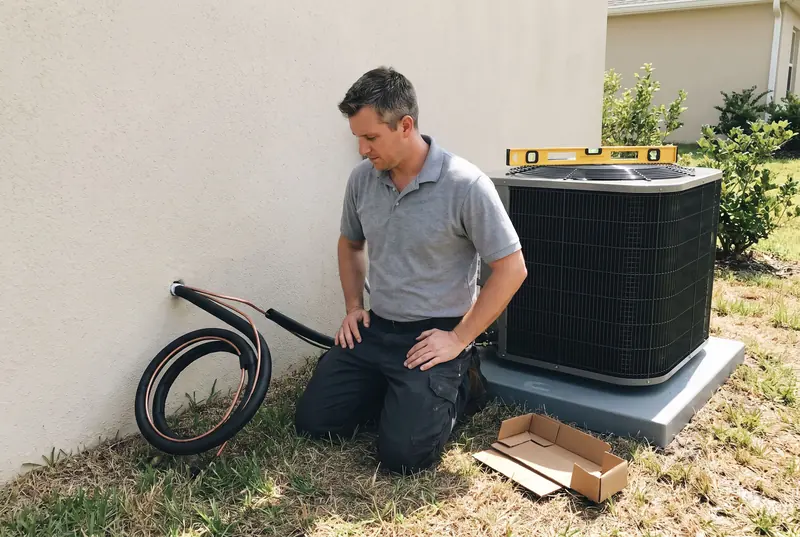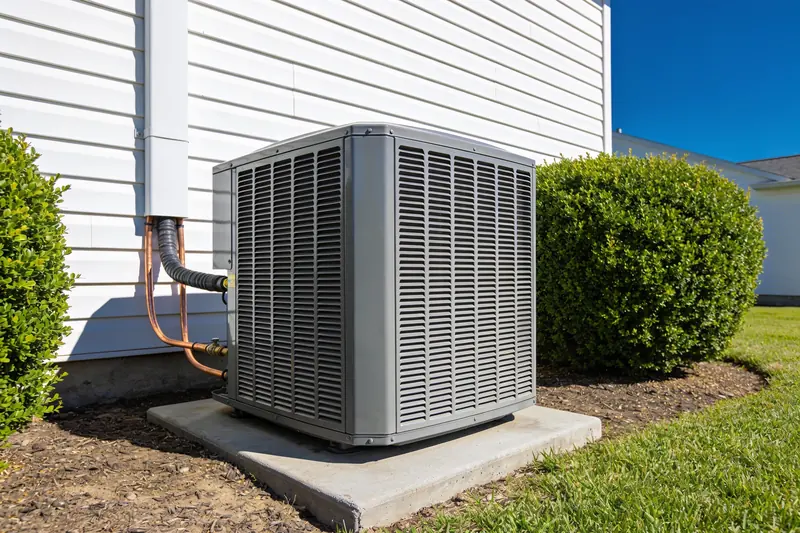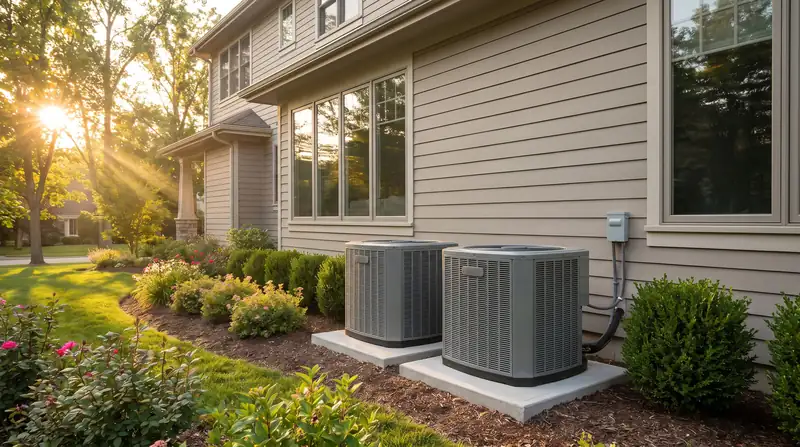
A new air conditioner should be a fifteen-year decision, and the installation day determines most of it. The industry's open secret is that a poorly installed system gives up a large slice of its rated efficiency before it ever cools a room: an oversized unit short-cycles, dehumidifies poorly, and leaves a Sandy Springs house cold but clammy; an undersized one runs flat-out and never catches up on the worst afternoons. That is why Sandy Springs HVAC starts every installation with a real load calculation, measuring your home's square footage, insulation, window exposure, and duct system, instead of matching the tonnage bolted to the wall by the last contractor.
The repair homeowners call us about most is AC Repair. If something has stopped working, start there.
Warning Signs for AC Installation
Recognizing the warning signs early can save you time and money. Keep an eye out for the following clues:
- A cold, damp feeling indoors, which usually points to an oversized system
- A system that has already passed its twelfth to fifteenth summer
- Cooling bills climbing every summer while comfort declines
- The system still uses phased-out R-22 refrigerant
- More frequent repairs, each one costing more than the last
- A major repair, like a dead compressor or leaking evaporator, on aging equipment
- Uneven cooling, with certain rooms that never get comfortable
- The AC runs constantly on hot days and never reaches the setpoint
Don't Wait for a Total Failure
Most HVAC failures start small, a weak capacitor, a squealing blower, a system that runs a little longer each week. At the first hint of a problem, call (470) 200-3152 for a fast inspection.